PREFACE
One of the major requirements for this blog for dealing with the definition of holy is to make sure it sheds light rather than blocks light. When something blocks light, then it quite obviously stands in the way of light. That is a great way to discern the value of anything a person reads on the definition of holy. We always need to ask, "Did this source shed light on what I am trying to find or did they shed darkness on what I am trying to find?" In the end: "Did I find what I was looking for?" or are we like U2 saying: "Still haven't found what I'm looking for".
A major drive in people is to find what is lost, until it is found. You likely arrived as this sight as a result of a search engine looking for the definition or meaning of holy.
A coin has value while it is in our pocket, but when it is lost, its value grows just like an item's value increases from scarcity. A lot of times over the years, to find something, I just needed to turn on the lights or grab a flashlight. The light functioned like a search engine. It showed me what I was looking for. Make sure that what you read on the definition of holy sheds light!
The purpose of my blog is to shed light on the meaning of holy. I bring things out into the light that have been blocked from people's view. It is not that the definition of holy was not previously well-known. It is that its meaning got lost somewhere along the way, resulting in many differing definitions.
For me, one of the primary things that was blocked from my view, when I read my Bible before the last 10 years, was the definition of the biblical word that we translate as "holy" as "moral wholeness". When I first saw "wholly" listed as a definition for the Hebrew word qadosh alongside "holy" as a translation in a Bible dictionary, then I knew that I had not seen or heard of that definition ever before. None of my teachers, who had often helped me perceive things anew, had brought this to light for me before this time (that I could recall). I was at the time searching to find a word in the Bible that united a set of different kinds of major moral values like love and truth together.
An important tool for teaching is what I call the 5 C's Cascade. It is a great tool for classroom enlightenment or persuasion. The fundamental rule of it is that you must complete the full cascade for persuasion to really happen.
The cascade looks like a series of water falls. You could also use the analogy of a set of 5 dominos that if one falls the others must fall with it. The analogies are manifold. Let's stick to the water falls in this case, since cascade language fits best with that analogy.
Here are the 5 steps of teaching for persuasion or shedding light at the barest bone level:
1) challenge
2) connection
3) celebration
4) chance
5) choice
You could also word them this way with a bit more explanation:
1) challenge (to see)
2) connection (to see)
3) celebration (to see)
4) chance (to see)
5) choice (to see)
or you could amplify it even more this way:
1) challenge (to see an amount)
2) connection (to see a relationship)
3) celebrate (to see whole)
4) chance (to see action)
5) choice (to see a thing)
I have become convinced from my time as a teacher and as a coach or my other time as a teacher and a pastor that the problem with most teaching is that it does not challenge. It just floats along with the tide of darkness rather than reaching for the lights. Good teaching is supposed to enlighten or bring to light things otherwise previously not seen. School is supposed to function as a corrective to nonsense and darkness. But does it do so, when it settles for darkness? How is it that we don't challenge the darkness instead?
If there is no light in the classroom, then how can we say that there is a teacher in the room? One of the great things about Jesus was that he was a teacher (otherwise known as a rabbi). He challenged the status quo, if you haven't noticed. He also shed light while other teachers loved the darkness instead. His teaching skills might have been one of his biggest reasons for his opposition to oppose him.
Challenge
My greatest teachers all challenged me to see things that I previously wasn't seeing. I can remember many examples, but let me mention one that I remember extremely well when it comes to challenging me.
James Johnson, a professor of mine at Bethel College (now University) in St. Paul, MN called me in to explain what I needed to do with a paper that I had written. I had written a paper for his history class on the First Great Awakening that I thought was going to get a good grade. I didn't get even a good grade, but also instead of stopping there he challenged me to re-write the paper to see the history of not just Jonathan Edwards and his camp, but also see that of others in opposition to him. I realized then that I was to bring both sides to light, not just one side to light and to accurately represent history through a vivid comparison of both sides in full view. Only then was my paper shedding light on history rather than a mixture of darkness and light according to my own choosing. I needed to shed light and give people a legitimate choice of options. I learned a great deal that opened my eyes to see things that I had not previously seen.
Photo of Bethel History Faculty in '80s
James Johnson (far left)
Connection
But it was not just Dr. James Johnson's challenge to see a greater amount than just one side, it was also Dr. John S. Piper's and Tom Stellar's (Dr. Piper's right hand man, if any) teaching me to see connections. Dr. Piper introduced me to a method of arcing that his teacher, Dr. Daniel P. Fuller, had taught him at Fuller Theological Seminary. This method opened my eyes so many times to see things that I had not seen before that I decided later to study myself under Fuller. I still like to call Dr. Fuller every so often and thank him, when I see a new relationship in the text that I never saw before through my revised arcing method.
Dr. John S. Piper in 1979
Dr. Daniel Payton Fuller
Celebration
But it was not just Piper and Fuller, who were teachers who opened my eyes. While I had gone to Fuller to learn about church planting in the School of World Mission (now the School of Intercultural Studies) and exegesis (the scholarly name for reading the Bible itself) under Dr. Fuller, I also discovered two unexpected sightings while I was there. I saw a leadership program that tied into my training under Tentmaker's, Inc. and my own self-study of Dr. Peter F. Drucker (then at Claremont Graduate School) that would challenge me as a leader more than I would be challenged as a student of church planting. So I changed my concentration from church planting to leadership. I also found an opportunity to learn more about translation and language studies as a whole and to take my learning to a higher level than I had achieved at Bethel College (now University) under Dr. William A. Smalley, Dr. Don N. Larson, and Lois Malcolm (now a professor at Luther Northwestern in St. Paul, MN). I found Dr. Betty Sue Brewster,. Dr. P. Daniel Shaw and Catherine Rountree, who all helped me see the bigger picture of language and communication at its broadest level. It was then that I began to see and know that it was only a matter of time before a reason for celebration could happen. I just had to remind myself not to count all my chicks till all my chicks were hatched. That is the time to celebrate, but in the middle of progressing, it is good to be reminded to wait. This sense of celebration mainly came from learning the TEAR method of language study that helped me see best the larger picture of language and communication. To the best of my ability, it appears that the TEAR view of language came primarily from Eugene A. Nida.
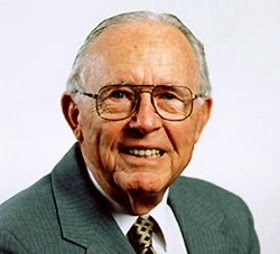
Eugene Albert Nida
Chance
But there is something more about the TEAR view of language than meets the eye. It is also that it shows that there is a chance to make a difference in the area of method or technology. Dr. P. Daniel Shaw was my first teacher that taught me how to use the TEAR approach to language. I was finally made able to use it effectively when I read a Bible text or anything else for that matter. So what Dr. Shaw gave me that the others previously had not was to see the chance of getting things accomplished that previously had seemed impossible. I remember very well that once I grasped the action words in a passage that suddenly I also saw better the relationships in a passage and it solved a problem in Piper's and Fuller's method that they had not solved for me. I will always have to acknowledge Dr. Shaw for first letting me see in ready the Bible new chances and new possibilities.
Choices
So what teachers taught me to see other choices? Who opened my eyes to be smarter? Often the difference between a smart person and a person who is not as smart is knowing that the choices are more diversified than the less intelligent person realizes. Who most opened my eyes to this?
Ironically, John S. Piper needs a lot of credit here though he would not be on the same page as my philosophy professors and anthropology professors on a number of topics. His list of choices would be shorter than theirs. He is the one who told me to study philosophy. Another theologian here who deserves some credit before I talk more about philosophers and anthropologists is Dr. Robert H. Stein. He taught me how to find new choices among the German scholars that others ranked as of no value. In the end, one of his ideas in A Basic Guide to Reading the Bible, may end up to have given me a choice in understanding the words of Greek, Aramaic, and Hebrew that no one else even suggests. So he cannot be underrated, that is for sure.
There is a long list of those who taught me to see choices that others never have gotten the option to even see, let alone have the option to make those choices. I've got to acknowledge my philosophy professors from college, who helped me see when theologians made a choice based on a philosophical school rather than a biblical text. That opened up things to see other choices. Their names include Dr. Don Postema, Dr. Melville Stewart, Dr. Stanley Anderson, Dr. Paul Reasoner, and Dr. Niel Nielson. In anthropology, both Dr. Thomas Correll and Dr. Sperry (sp?). Alongside of them I was also introduced to Dr. Michael Rynewich (from Macalester) and Dr. David Rausch from the history department. All of them opened my eyes to seeing the many choices that others did not see.
This largely culminated in three major papers I wrote while at Fuller Theological Seminary. One was a paper where I summarized all the possible views on baptism looking at all the choices from a broad cultural view. Then I did later another paper that involved a ton of research where I suggested other choices for interpreting Paul's comments on singleness. I tried to turn over every rock of choices and then tried to discern which were good choices and which were not. But my advantage was that I had a lot of choices before deciding. This also led me to the Center for the Study of Biblical Research in Pasadena, CA where I learned more about Jewish culture or philosophy.
The big benefit from all of these choices is having more choices from which to choose, because I can see them while before I could not.
In all of this discussion, I have left out other names that also could be mentioned. I hope I have another time to give them their due. Already, my mind is beginning to catalog those who I have missed. The trade off in not mentioning them here is that my writing does not grow even longer. That is a good choice. Thank you.
[I will re-visit this and other writing as possible. thank you for your patience.]
In Christ,
Jon
Showing posts with label teach. Show all posts
Saturday, April 12, 2014
Thursday, March 27, 2014
Holy: Understanding It Better Through Gen. 1:1-2:4a (Total)
PREFACE
The definition of holy has certainly seen its share of conflict and controversy in the last 100 plus years. But also it has high level of importance in the Bible and in terms of personal interest and its potential connection to a very timely topic - healthy. The personal interest is seen in its close connection with a person's name, as for an example, God's name of Yahweh. "Holy be your name" is part of the opening in the Lord's Prayer. The topic of being whole or being healthy is currently one of major importance. With the possible definition of "moral wholeness", it could tie directly into healthy as one of the hot topics of the 21st century. So the overall or total approach to determining a word's meaning is looking at all four areas of interest or concern: 1) translate to an equal, 2) transfer from and to a location and time, 3) total to avoid need gaps, 4) train in the skills for application, and 5) teach what is what.
So far in my entries this week, I have dealt with translation and transfer. Today, I will be spending some time beefing up 1) translate and 2) transfer. I will also use today to look ahead to 3) training and 4) teaching elements. This is what I call the total. It keeps me from leaving gaps in my attempt to persuade others of the meanings for Yahweh, blessed, and holy.
In the Western world, we usually associate the total of something with the opening and closing of what we say, but I want to take a more Eastern approach and place it primarily in the middle. This approach I learned from Mary Douglas, a rather famous anthropologist, who has written on the different structural pattern found in Hebrew writings in the Bible. This does not mean that I will not also have the total of all the parts in the opening and closing, as is usually found in the West. Rather it means I will keep my eye on the whole of the process also in the middle of my writing like the Hebrews.
I value the total so much, because without it things are not complete or total and can therefore easily fail. One writer in speaking of the persuasion cascade pointed out that his method would not work, if it was not completed through the whole of the steps. He understood that there would then be gaps in the persuasion process which then could lead to persuasion failure. I think this also applies to defining words and trying to make a good case for a particular view.
The greatest example of the opposite of what I am saying is the view that the context is THE key to understanding the meaning of a word. Now that the etymology of holy in the Hebrew, the Aramaic, and the Greek is seen as a matter of conflict and controversy; context is now being promoted as THE way to resolve its meaning. I find that very unsatisfactory. It is only one part of at least four perspectives in the total reading and understanding process of reading the Scripture.
That is critical to understanding my approach. Context alone for defining a word will not work in my view. It requires a much more comprehensive approach. Then from that larger perspective, a person can see the convergence of perspectives hopefully all pointing to the same thing.
My goal through this blog is to give people another choice in the area of meaning that they have not previously been aware of as people, who desire to know the meaning of key words in their Bible. I am trying to shed light on the topics of God's name, blessing, and holy that have been hidden in the darkness. Beginning with a choice is critical in reaching the ultimate goal of celebration.
The 5 step persuasion process is like this for the one trying to persuade others:
1) choice by helping people see,
2) chance by enabling people to do,
3) connect by a willing opportunity,
4) change by filling empty hands to satisfaction, and
5) celebrate by people enjoying the experience of not having gaps in fulfilling their needs.
My goal through these 5 steps is to get people to seeing, able, willing, and ready. It takes all of that to reach full blown personal eagerness.
Here's another way to express in words what is desirable for those seeking answers to questions:
1) A choice that you see,
2) A chance for you to be able,
3) A connection that you willingly embrace,
4) A change that fills you up to ready, and
5) A celebration that is all that you need rather even one need short.
Here's Jesus' purpose and goals for similar kinds of things (in Luke 4:18):
1) to restore sight to the blind, who are those not seeing,
2) to free the oppressed, who are those unable,
3) to liberate the captives, who are those unwilling,
4) to tell the gospel to the poor, who are those unready, and
5) to fulfill the whole of the purposes or goals (ex. Jesus' bucket list or ministry goals), and not even one less than this to those suffering, who are those not eager due to a purpose gap.
If you are not eager, then you are suffering. If every one of the criteria is met: seeing, able, willing, and ready, then suffering is relieved. The point is that you only have to be missing one of those things to suffer and not be eager.
So why are you not eager for work? Have you ever thought about it lacking one or more of these goals or purposes? Why are you not eager to go to church? Could it be that this organization that is supposed to be built around Jesus' goals has lost its bearings?
If you fulfill all these things on Jesus' bucket list of goals, then you will eliminate or at least alleviate suffering. So you might ask this: "So how do I become eager?" It is through finishing the goal list that Jesus laid out.
If we changed all things to the direction of Jesus' goals, then I believe people will be so eager they will be breaking down the doors to churches. We can then return to standing room only and people waiting outside to get in.
Here's how you can become eager (based on the rewards for not just you but others equally):
So now, let's lay out the choices :
20th ct. choice - the definition of holy is set apart, and it has less to do with purity or with wholeness compared to what was previously thought.
21st ct. choice - the definition of holy is moral wholeness, the implication is purity, and the significance is that this is what sets us apart (the definition and the implication altogether).
Let's lay out the chances:
20th ct. chance - not much of a chance, but the only real chance we have to draw people back to the church is through being contemporary in terms of music and technology.
21st ct. chance - the practical aspect of making things morally whole or physically whole means that we can do things that were impossible previously
Let's lay out the connections:
20th ct. connect - the various denominational and non-denominational teams on the landscape will continue to be tied to the same leaders of the past in Protestantism and there will be little future hope of reconnecting in a tightly formed team
21st ct. connect - there will now be a real chance to join together in a way that is tightly bound to one another rather than in a loose alliance
Let's lay out the changes:
20th ct. change - the continued changes in technology will drive us to the greatest changes we are capable of making
21st ct change - the change will happen on a personal level with human beings and their moral character resting on a new quality standard and accomplishment.
Let's lay out the celebration:
20th ct celebration - the best of that optimism happened in the 1950s and is unlikely to be revived to a higher pitch going forward
21st ct. celebration - the biblical stories of "it felt like we were dreaming" will be the same kind of reason we are celebrating.
So as I go forward the next couple of days I hope I can demonstrate the value of training and teaching in terms of new capabilities and possibilities and also new sight and a reduction in blindness. May God bless the remainder of your day and please visit all 5 blog entries this week to grasp the whole picture.
In Christ,
Jon
The definition of holy has certainly seen its share of conflict and controversy in the last 100 plus years. But also it has high level of importance in the Bible and in terms of personal interest and its potential connection to a very timely topic - healthy. The personal interest is seen in its close connection with a person's name, as for an example, God's name of Yahweh. "Holy be your name" is part of the opening in the Lord's Prayer. The topic of being whole or being healthy is currently one of major importance. With the possible definition of "moral wholeness", it could tie directly into healthy as one of the hot topics of the 21st century. So the overall or total approach to determining a word's meaning is looking at all four areas of interest or concern: 1) translate to an equal, 2) transfer from and to a location and time, 3) total to avoid need gaps, 4) train in the skills for application, and 5) teach what is what.
So far in my entries this week, I have dealt with translation and transfer. Today, I will be spending some time beefing up 1) translate and 2) transfer. I will also use today to look ahead to 3) training and 4) teaching elements. This is what I call the total. It keeps me from leaving gaps in my attempt to persuade others of the meanings for Yahweh, blessed, and holy.
In the Western world, we usually associate the total of something with the opening and closing of what we say, but I want to take a more Eastern approach and place it primarily in the middle. This approach I learned from Mary Douglas, a rather famous anthropologist, who has written on the different structural pattern found in Hebrew writings in the Bible. This does not mean that I will not also have the total of all the parts in the opening and closing, as is usually found in the West. Rather it means I will keep my eye on the whole of the process also in the middle of my writing like the Hebrews.
I value the total so much, because without it things are not complete or total and can therefore easily fail. One writer in speaking of the persuasion cascade pointed out that his method would not work, if it was not completed through the whole of the steps. He understood that there would then be gaps in the persuasion process which then could lead to persuasion failure. I think this also applies to defining words and trying to make a good case for a particular view.
The greatest example of the opposite of what I am saying is the view that the context is THE key to understanding the meaning of a word. Now that the etymology of holy in the Hebrew, the Aramaic, and the Greek is seen as a matter of conflict and controversy; context is now being promoted as THE way to resolve its meaning. I find that very unsatisfactory. It is only one part of at least four perspectives in the total reading and understanding process of reading the Scripture.
That is critical to understanding my approach. Context alone for defining a word will not work in my view. It requires a much more comprehensive approach. Then from that larger perspective, a person can see the convergence of perspectives hopefully all pointing to the same thing.
My goal through this blog is to give people another choice in the area of meaning that they have not previously been aware of as people, who desire to know the meaning of key words in their Bible. I am trying to shed light on the topics of God's name, blessing, and holy that have been hidden in the darkness. Beginning with a choice is critical in reaching the ultimate goal of celebration.
The 5 step persuasion process is like this for the one trying to persuade others:
1) choice by helping people see,
2) chance by enabling people to do,
3) connect by a willing opportunity,
4) change by filling empty hands to satisfaction, and
5) celebrate by people enjoying the experience of not having gaps in fulfilling their needs.
My goal through these 5 steps is to get people to seeing, able, willing, and ready. It takes all of that to reach full blown personal eagerness.
Here's another way to express in words what is desirable for those seeking answers to questions:
1) A choice that you see,
2) A chance for you to be able,
3) A connection that you willingly embrace,
4) A change that fills you up to ready, and
5) A celebration that is all that you need rather even one need short.
Here's Jesus' purpose and goals for similar kinds of things (in Luke 4:18):
1) to restore sight to the blind, who are those not seeing,
2) to free the oppressed, who are those unable,
3) to liberate the captives, who are those unwilling,
4) to tell the gospel to the poor, who are those unready, and
5) to fulfill the whole of the purposes or goals (ex. Jesus' bucket list or ministry goals), and not even one less than this to those suffering, who are those not eager due to a purpose gap.
If you are not eager, then you are suffering. If every one of the criteria is met: seeing, able, willing, and ready, then suffering is relieved. The point is that you only have to be missing one of those things to suffer and not be eager.
If you are not eager,
then you are suffering.
So why are you not eager for work? Have you ever thought about it lacking one or more of these goals or purposes? Why are you not eager to go to church? Could it be that this organization that is supposed to be built around Jesus' goals has lost its bearings?
If you fulfill all these things on Jesus' bucket list of goals, then you will eliminate or at least alleviate suffering. So you might ask this: "So how do I become eager?" It is through finishing the goal list that Jesus laid out.
If we changed all things to the direction of Jesus' goals, then I believe people will be so eager they will be breaking down the doors to churches. We can then return to standing room only and people waiting outside to get in.
Here's how you can become eager (based on the rewards for not just you but others equally):
So now, let's lay out the choices :
20th ct. choice - the definition of holy is set apart, and it has less to do with purity or with wholeness compared to what was previously thought.
21st ct. choice - the definition of holy is moral wholeness, the implication is purity, and the significance is that this is what sets us apart (the definition and the implication altogether).
Let's lay out the chances:
20th ct. chance - not much of a chance, but the only real chance we have to draw people back to the church is through being contemporary in terms of music and technology.
21st ct. chance - the practical aspect of making things morally whole or physically whole means that we can do things that were impossible previously
Let's lay out the connections:
20th ct. connect - the various denominational and non-denominational teams on the landscape will continue to be tied to the same leaders of the past in Protestantism and there will be little future hope of reconnecting in a tightly formed team
21st ct. connect - there will now be a real chance to join together in a way that is tightly bound to one another rather than in a loose alliance
Let's lay out the changes:
20th ct. change - the continued changes in technology will drive us to the greatest changes we are capable of making
21st ct change - the change will happen on a personal level with human beings and their moral character resting on a new quality standard and accomplishment.
Let's lay out the celebration:
20th ct celebration - the best of that optimism happened in the 1950s and is unlikely to be revived to a higher pitch going forward
21st ct. celebration - the biblical stories of "it felt like we were dreaming" will be the same kind of reason we are celebrating.
So as I go forward the next couple of days I hope I can demonstrate the value of training and teaching in terms of new capabilities and possibilities and also new sight and a reduction in blindness. May God bless the remainder of your day and please visit all 5 blog entries this week to grasp the whole picture.
In Christ,
Jon
Thursday, January 24, 2013
Holy: Understanding it Better Through Answering the Question "Why?"
So why does the definition of holy matter? There are fundamentally two answers to that question. The first is the life-relevant answer. The second is the teaching-relevant answer. I have generally spent more time on the second than on the first in this blog. I have a second blog that answers more the first question, but it depends a great deal on answering the teaching-relevant question that this blog focuses on the majority of the time. Today, I want to expand more on both answers to the why questions you might have.
By the way, before I get too far, I want to say that holy can be defined according to the level of adherents for each view, either as: (1) set apart, (2) pure, or (3) whole/wholly. I'll say more on this as I progress, but I know some readers are visiting this blog just for the fast answer and they will not read any further. For those who are reading further, here is what I am up to in my blog and in my paper for my post-graduate work.
My plan is as follows:
I will define holy (Leviticus 19:1-2) as either: 1) set apart, 2) pure, or 3)whole/wholly depending on the evidence that I collect from Scripture in its original languages of Hebrew, Aramaic, and Greek ....
... using both biblical exegesis and linguistic synthesis & analysis as my tools, including:
1) 5 T's - Translate, Transfer, Total, Train, and Teach - Nehemiah 8 (issue: Whole)
2) clarity and meaning combined (issue: Amount)
3) contextual structural analysis diagrams to identify precise parallels (issue: Relationship)
4) pre-state and post-state diagrams as well as syntactical tools to clarify actions (issue Action)
5) the combination of lexicons based on both classical grammar and scientific linguistics to insure
the best results (issue: Things) ...
... Because:
1) the definition of holy is a potential solution to corporate and individual struggles in the church
and even worldwide, based on its implications
2) other potential solutions that have been tried in recent decades and years have fallen short of
solutions during past periods of church reformation and revival
3) there is a measure of uncertainty or lack of clarity for what holy is by definition, and there is
a likely way to reduce the uncertainty that has been acknowledged by big name scholars (Otto,
Snaith, Kline, etc.)
4) there is a moral obligation to pass on the gifts given to me by my teachers (and I believe the
Holy Spirit) to the wider world
5) the effort to define holy fits with the tools that I received for exegesis and for linguistic
synthesis, so it means that I can contribute something to the discussion because otherwise I should
do nothing, so I don't waste the time of others.
So the first 5 focus on what is the "How?" for what I am doing. The second 5 get at the nitty-gritty part of "Why?" am I doing all this. For me life matters more than teaching, but also teaching is sometimes the means to life change. May God richly bless you this day and may He guide my efforts at teaching, so they have worth and value to others and to myself. Thank you for taking some time to read to the end of my writing today.
In Christ,
Jon
By the way, before I get too far, I want to say that holy can be defined according to the level of adherents for each view, either as: (1) set apart, (2) pure, or (3) whole/wholly. I'll say more on this as I progress, but I know some readers are visiting this blog just for the fast answer and they will not read any further. For those who are reading further, here is what I am up to in my blog and in my paper for my post-graduate work.
My plan is as follows:
I will define holy (Leviticus 19:1-2) as either: 1) set apart, 2) pure, or 3)whole/wholly depending on the evidence that I collect from Scripture in its original languages of Hebrew, Aramaic, and Greek ....
... using both biblical exegesis and linguistic synthesis & analysis as my tools, including:
1) 5 T's - Translate, Transfer, Total, Train, and Teach - Nehemiah 8 (issue: Whole)
2) clarity and meaning combined (issue: Amount)
3) contextual structural analysis diagrams to identify precise parallels (issue: Relationship)
4) pre-state and post-state diagrams as well as syntactical tools to clarify actions (issue Action)
5) the combination of lexicons based on both classical grammar and scientific linguistics to insure
the best results (issue: Things) ...
... Because:
1) the definition of holy is a potential solution to corporate and individual struggles in the church
and even worldwide, based on its implications
2) other potential solutions that have been tried in recent decades and years have fallen short of
solutions during past periods of church reformation and revival
3) there is a measure of uncertainty or lack of clarity for what holy is by definition, and there is
a likely way to reduce the uncertainty that has been acknowledged by big name scholars (Otto,
Snaith, Kline, etc.)
4) there is a moral obligation to pass on the gifts given to me by my teachers (and I believe the
Holy Spirit) to the wider world
5) the effort to define holy fits with the tools that I received for exegesis and for linguistic
synthesis, so it means that I can contribute something to the discussion because otherwise I should
do nothing, so I don't waste the time of others.
So the first 5 focus on what is the "How?" for what I am doing. The second 5 get at the nitty-gritty part of "Why?" am I doing all this. For me life matters more than teaching, but also teaching is sometimes the means to life change. May God richly bless you this day and may He guide my efforts at teaching, so they have worth and value to others and to myself. Thank you for taking some time to read to the end of my writing today.
In Christ,
Jon
Labels:
clarity,
classic grammar,
define,
definition,
hagios,
hallow,
holy,
how,
meaning,
qadosh,
sanctification,
scientific linguistics,
teach,
total,
train,
transfer,
translate,
why
Subscribe to:
Comments (Atom)


